How to Analyze a Competitor's Shopify Store: A 10-Step Guide
Learn to analyze a competitor's Shopify store in ten steps, using Drilify to connect storefront, product, pricing, traffic, ad, and profitability signals.
Learn to analyze a competitor's Shopify store in ten steps, using Drilify to connect storefront, product, pricing, traffic, ad, and profitability signals.
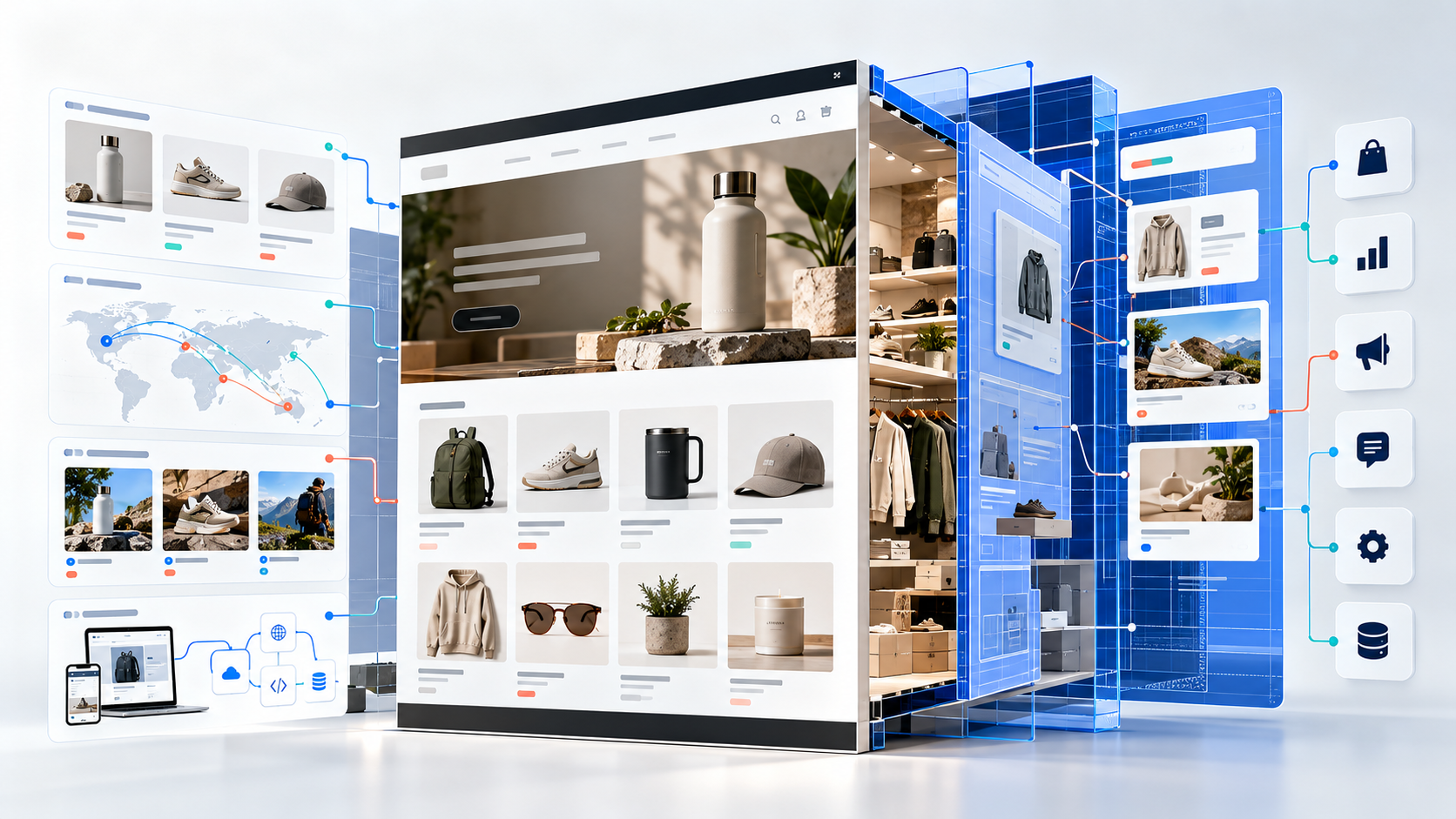
To analyze a competitor's Shopify store, study who it serves, which products and offers it leads with, how it attracts shoppers, and what the buying experience does well. Drilify connects store, catalog, traffic, ad, and technology signals, so you can turn that storefront review into a decision about your own product and offer.
This ten-step guide takes you from choosing comparable stores to planning an original test. You will leave with a clear view of the competitor's positioning, the opportunities worth investigating, and the price and margin limits your own offer must meet.
What should a competitor store analysis include?
A complete analysis should answer seven questions:
Positioning: Who is the store for, and what problem does it promise to solve?
Offer: Which products, bundles, discounts, and guarantees receive the most attention?
Catalog: How broad is the range, how is it organized, and which items appear strategically important?
Pricing: What price bands, discount patterns, and thresholds shape the offer?
Acquisition: Where might traffic come from, and which ads or content support the storefront?
Operations: Which technologies and customer-experience tools appear to support the business?
Economics: Could a similar offer work after product cost, shipping, fees, advertising, returns, and taxes?
Use these questions as a scorecard for each store. Note where an observation came from and when you saw it, then use Drilify to investigate the product, traffic, advertising, and store signals that matter to your decision.
LATEST POSTS
More from Drilify
Interviews, tips, guides, industry best practices, and news.
14 min read
11 Best Dropshipping Product Research Tools for 2026
Compare 11 dropshipping product research tools by workflow, current pricing, features, and limitations, including Drilify and useful free resources.
1. Define the decision before choosing competitors
Start with one decision you need to make. A focused question keeps the analysis useful: should you test a different price band, a clearer product benefit, a better bundle, or a stronger buying experience?
Examples include:
Which price range should we test for a premium desk-accessory bundle?
Which product benefit appears most often in stores serving new parents?
Do leading stores organize this category by use case, material, or customer type?
Which trust signals appear before the add-to-cart button?
Which products deserve a deeper sourcing and margin check?
Write the question at the top of your notes. Add the market, customer, product category, and intended selling model. A store serving US customers with domestic inventory is not a clean benchmark for a store shipping internationally from a distant supplier.
Pro tip: Decide what would change your mind before you begin. For example: “We will not launch if landed cost leaves less than our target contribution margin at the competitor's common price.” This prevents attractive storefronts from overruling basic economics.
2. Build a comparable competitor set
Choose three to five stores instead of relying on one apparent leader. Include different competitive roles:
A direct competitor selling a similar product to a similar customer.
A problem competitor solving the same need with a different product.
A premium or specialist brand that demonstrates strong positioning.
A marketplace or broad retailer that shows category norms.
An emerging store that may reveal newer creative or offer patterns.
Confirm that each store is active and relevant to the same geography. Record the domain, apparent platform, target market, main category, broad price position, and the date checked. If platform identification matters, use storefront evidence or a theme detector rather than assuming every polished store runs on Shopify.
Drilify's Competitor Research and Store Intelligence put store and competitor signals beside your storefront review. Use them to compare relevant shops, surface catalog and traffic clues, and decide which differences deserve a closer look.
Compare store profile, product, growth, and social context in Drilify.
3. Capture the store's positioning and customer promise
Open the homepage, one collection page, one product page, the About page, and any prominent landing page. First ask what the store wants a buyer to believe; then examine how its catalog and page details support that promise.
Record:
The main headline and the customer problem it addresses.
The primary audience implied by photography, language, reviews, and product selection.
The first three benefits presented above the fold.
The strongest proof elements, such as guarantees, review counts, press mentions, demonstrations, or before-and-after evidence.
The primary call to action and the amount of friction before purchase.
Shipping, returns, subscriptions, warranties, and support promises.
Then write a one-sentence positioning summary in your own words: “This store helps [customer] achieve [outcome] through [product or mechanism], supported by [proof].” If that sentence is difficult to write, the store may rely on a broad catalog rather than a focused position.
Avoid treating polished design as proof of commercial strength. Good design can improve clarity and trust, but it does not reveal traffic quality, customer acquisition cost, refund rate, or net profit.
4. Map the catalog and merchandising structure
Catalog structure reveals which buying paths the merchant considers important. Review the main navigation, collection hierarchy, search filters, bundles, subscriptions, sale pages, and seasonal sections.
For each major collection, record:
Number and type of products shown.
Common price range and visible discount pattern.
Product families, variants, bundles, and accessories.
Sorting defaults and filters.
Items repeatedly featured on the homepage, collection pages, or recommendation modules.
Recently added or frequently promoted products where that evidence is visible.
Cross-sells used on product pages and in the cart.
In Drilify, Shop Library and product research connect a Shopify store to its catalog, pricing, reviews, and available sales signals. Shortlist the products that matter to the store's offer, then compare their role, momentum, and customer response before investigating a similar idea for your own market.
Compare a competitor's product selection, prices, reviews, and available sales signals.
Pro tip: Repeated placement is a clue, not proof. A product shown in the hero, a collection banner, and a recommendation block is strategically important to the store, but it may be a new launch, a high-margin item, or a product the merchant needs to clear. Look for more than one signal.
5. Analyze pricing, discounts, and offer architecture
Pricing analysis should explain the offer, not merely produce an average. Group products into practical bands and note how the store moves customers between them.
Check:
Entry, core, and premium price points.
Compare-at pricing and the frequency of discounts.
Bundle savings and quantity breaks.
Free-shipping thresholds.
Subscription discounts or membership benefits.
Gifts with purchase, warranties, and guarantees.
Upsells, cross-sells, and post-purchase offers.
Currency and regional differences.
Calculate a few simple comparisons: median visible product price, bundle discount versus buying separately, and the gap between the most promoted product and the category's entry point. Record the date because promotional pricing changes.
Do not assume the cheapest offer wins. A higher price may be supported by faster delivery, stronger proof, a better guarantee, a more complete bundle, or clearer positioning. Likewise, a deep discount may be temporary or may signal pressure to move inventory.
Your conclusion should be actionable: “Competitors cluster around this price, but the strongest offers justify a premium with a bundle and a clear guarantee.” That is more useful than “Store A charges $39.99.”
6. Evaluate product pages and conversion signals
Choose three products: a prominently featured item, a typical core item, and a premium or bundled offer. Review each page using the same checklist.
Above the fold
Check the title, price, primary image or video, variant controls, review evidence, delivery promise, payment options, and add-to-cart action. Note whether the visitor can understand the product and its value without scrolling.
Persuasion structure
Track the order of benefits, features, demonstrations, comparisons, testimonials, guarantees, FAQs, and objections. The order matters because it shows how the merchant expects a buyer's questions to unfold.
Product evidence
Distinguish factual product details from marketing claims. Look for dimensions, materials, compatibility, care instructions, shipping details, certifications, or demonstrations that reduce purchase uncertainty.
Search and AI visibility
Review title clarity, headings, description depth, image alt text where inspectable, FAQs, and structured information. These elements can support human comprehension and search discovery, but their presence alone does not establish rankings.
The missing answers can be your opportunity. If several product pages leave sizing, delivery, compatibility, or proof unclear, make those details easier to find and understand in your own offer.
7. Study traffic sources and active marketing signals
The storefront shows what a buyer sees. Drilify helps you connect that destination to traffic patterns, visible ads, and the product offer behind each campaign.
Start with the store's visible channels: social profiles, email capture, referral or affiliate pages, blog content, creator partnerships, and paid-ad destinations. Then use available intelligence to organize estimates and observed advertising activity.
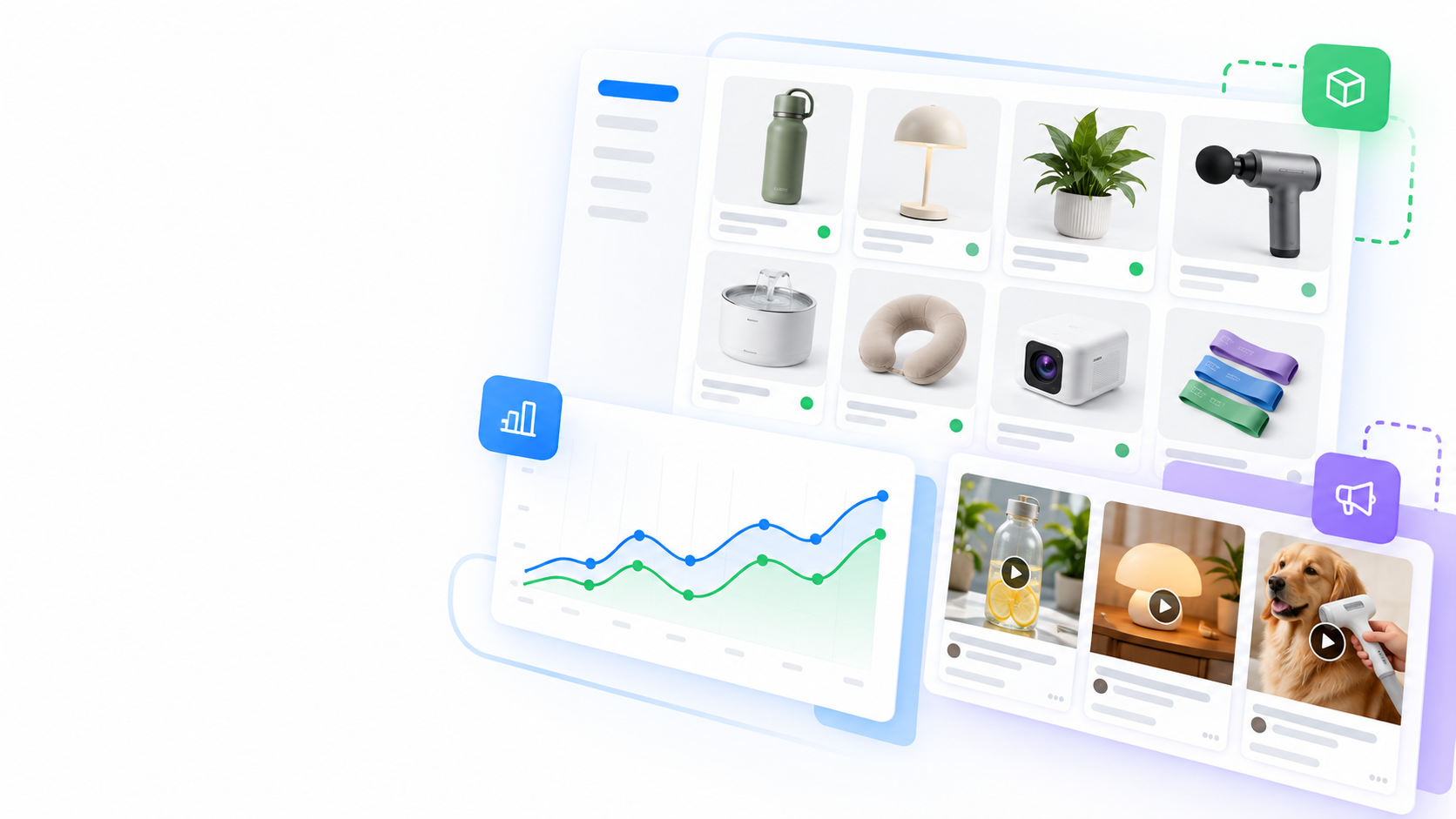
Drilify Store Intelligence can show an estimated mix of paid, organic, social, and direct traffic, with related keywords and advertising signals where available. Use the mix to choose your next investigation: review rankings and content for an organic-heavy store, or open the creative and landing pages when paid activity stands out.
Use Drilify's traffic view to identify which acquisition channels deserve closer study.
In Drilify, use Ad Spy and Advertiser Library to connect visible Meta and TikTok creatives to the advertisers and offers behind them. Record the hook, demonstration, promise, landing page, market, and activity dates, then compare patterns across stores.
A long-running ad is worth studying for its message and offer. Decide whether that angle is useful for your own business only after checking the product, customer promise, and economics.
Pro tip: Follow the message from ad to landing page. The useful unit of analysis is not the creative alone. It is the complete path from hook, to promise, to proof, to offer, to checkout.
8. Inspect the technology and customer-experience stack
Technology can reveal operational priorities. A detected theme, review app, email platform, subscription tool, support widget, page builder, or fulfillment integration may explain how the store executes parts of its experience.
See the detected store tools behind reviews, support, subscriptions, and conversion.
Organize detected tools by customer job:
Storefront and theme: layout, navigation, performance, and merchandising.
Reviews and trust: ratings, user-generated content, and social proof.
Retention: email, SMS, loyalty, and subscriptions.
Support: chat, help desk, tracking, and returns.
Conversion: bundles, upsells, personalization, and testing.
Operations: fulfillment, inventory, analytics, and attribution.
Use detected technology to understand how a store delivers its customer experience. A review app may support trust, while a support tool may reduce uncertainty after purchase. Choose tools for the customer problem you need to solve, not because a competitor uses them.
The Shopify Theme Detector can provide a quick theme and basic store check, while Store Intelligence and Competitor Research provide broader context. Treat theme identity as one input. A theme does not explain the merchant's copy, offer, creative quality, service, or economics.
9. Validate the opportunity with sourcing and unit economics
This is where competitor insight becomes a launch decision. Put the attractive offer beside your actual supplier, delivery, fee, and acquisition costs before deciding to test it.
Estimate:
Product and packaging cost.
Freight and last-mile shipping.
Payment and platform fees.
Duties, taxes, or VAT where applicable.
Expected returns, refunds, and replacements.
Discounts and affiliate commissions.
Customer support and operational costs.
Target advertising cost per order.
Test several scenarios rather than one perfect forecast. Use a conservative case, a base case, and an optimistic case. Calculate gross margin, contribution margin, break-even acquisition cost, and the sales volume required to cover fixed expenses.
Use Drilify's sourcing context to compare supplier, product cost, estimated retail, margin, competition, and fulfillment signals where available. Then model your own break-even point with its profitability tools. That connects an interesting competitor offer to a price and acquisition limit you can actually test.
If a competitor's common price cannot support your landed cost and realistic acquisition assumptions, do not force the idea. Change the product, bundle, supplier, market, or customer promise before spending on inventory or ads.
10. Turn observations into an original test plan
Finish with four decisions, not a folder of screenshots:
Keep
Patterns supported by several relevant competitors and aligned with your customer, such as clear compatibility guidance or a useful comparison section.
Improve
Practices that work but could be made clearer, faster, more specific, or more trustworthy for your audience.
Avoid
Weak patterns such as permanent-looking discounts, unsupported claims, confusing navigation, or economics that do not survive a conservative scenario.
Test
Three to five hypotheses with a metric and a time window. For example: “A two-item starter bundle will raise average order value without reducing conversion below our acceptable range.”
For each test, name the observation behind it, what you will change, the main metric, a guardrail, and a stopping rule. Use your own creative and copy to turn a useful pattern into an offer that fits your customer.
Pro tip: Re-run the analysis on a schedule. Pricing, ads, products, and technology change. A dated quarterly snapshot is more useful than a “competitor file” that quietly becomes stale.
A practical competitor-analysis scorecard
Before closing the research, confirm that your notes contain:
A focused decision and a comparable set of stores.
A one-sentence positioning summary for each store.
Catalog, pricing, bundle, and discount observations.
Three consistently reviewed product pages per store.
Traffic and acquisition hypotheses labeled as estimates where appropriate.
Advertising examples linked to their landing pages.
Technology detections grouped by customer job.
A conservative profitability scenario for any product you may test.
Three original experiments with metrics and stopping rules.
A source and check date for each important conclusion.
Common competitor-analysis mistakes
Copying the visible result instead of understanding the system
A product page is the output of positioning, sourcing, creative, traffic, service, and economics. Copying its layout does not reproduce those conditions.
Choosing famous stores instead of comparable stores
Large brands may be useful for inspiration but poor benchmarks for an early-stage seller. Compare customer, geography, fulfillment, product complexity, and price position.
Collecting without deciding
If the research does not change a product, offer, landing page, sourcing, or testing decision, the scope is probably too broad.
Ignoring freshness
Ads stop, prices change, products sell out, themes update, and estimates age. Record dates and repeat the analysis when the decision is still important.
Frequently asked questions
What is competitor store analysis?
Competitor store analysis is a structured review of another retailer's positioning, catalog, pricing, product pages, acquisition signals, technology, and customer experience. For Shopify stores, it combines direct storefront observations with carefully labeled store, product, traffic, and advertising estimates to create decisions and testable hypotheses.
How do I find Shopify competitors to analyze?
Start with stores selling similar products to the same audience and market. Add problem competitors that solve the same need differently, one premium specialist, and an emerging store. Confirm that each store is active, relevant, and comparable before including it.
Can I see a competitor Shopify store's exact revenue?
Yes but an estiamte of revenue and traffic figures. Use estimates directionally, cross-check them with catalog, advertising, review, and storefront evidence, and avoid presenting them as audited results.
What should I analyze on a competitor's product page?
Review the above-the-fold offer, images and video, variants, price, delivery promise, reviews, benefits, specifications, proof, guarantees, FAQs, cross-sells, and objections. Compare the same elements across several products and stores so one unusual page does not control the conclusion.
Is it legal to analyze a competitor's public Shopify store?
Reviewing publicly available pages for legitimate market research is common, but laws, platform terms, data rights, and acceptable automated access vary. Do not bypass access controls, collect restricted personal data, or copy protected creative assets. Get qualified legal advice for a specific use case or jurisdiction.
How often should I repeat Shopify competitor analysis?
Run a light review monthly for active campaigns and important competitors, and a deeper review quarterly or before a major launch. Repeat sooner when a competitor changes pricing, introduces a key product, launches new ads, or shifts its positioning.
Analyze a Shopify competitor with Drilify
A good competitor analysis ends with a better decision: which customer to serve, which product or offer to test, and whether the numbers can work. Drilify connects store profiles, products, traffic estimates, ads, technology, sourcing context, and profitability checks, so those decisions can be made in one research workflow.