Dropship.io Free Alternative: Why Drilify Is the Best Choice
Explore Drilify as a Dropship.io alternative: free tools, limited trial access, current pricing, TikTok research, sourcing insights, and flexible credits.
Explore Drilify as a Dropship.io alternative: free tools, limited trial access, current pricing, TikTok research, sourcing insights, and flexible credits.
Looking for a Dropship.io free alternative? Drilify gives you free tools and a limited trial to evaluate its workflow, with paid research from $29/month. Both platforms support product, store, and advertising research. Drilify goes further by connecting those signals to sourcing economics, margin checks, listing preparation, and flexible feature credits.
The important distinction is what you can do before paying and what your subscription helps you decide afterward. Drilify is our best choice for sellers who want that connected research-to-launch workflow.
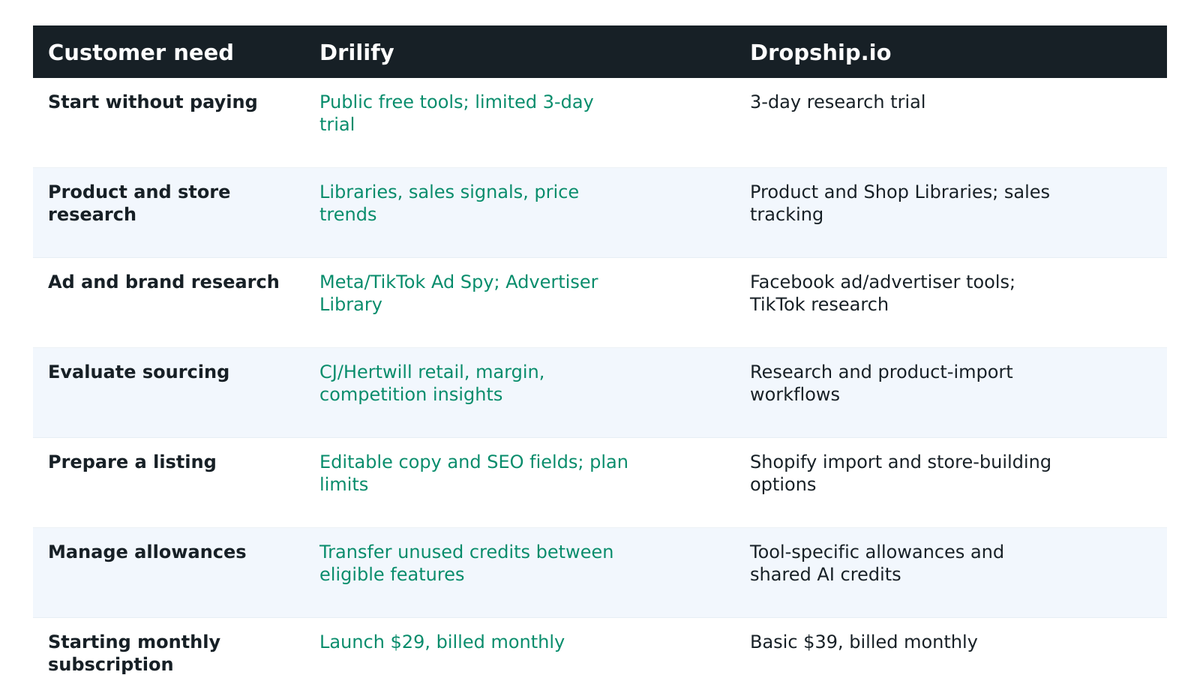
Drilify and Dropship.io: feature comparison at a glance
Current public terms checked October 8, 2026. Features and allowances vary by plan.
Comparison in text
Start without paying: Drilify: Public free tools; limited 3-day trial; Dropship.io: 3-day research trial but users have complained about data being outdated and in most cases things arent working.
Product and store research: Drilify: Libraries, sales signals, price trends; Dropship.io: Product and Shop Libraries; sales tracking.
Ad and brand research: Drilify: Meta/TikTok Ad Spy; Advertiser Library; Dropship.io: Facebook ad/advertiser tools; TikTok research.
Evaluate sourcing: Drilify: CJ/Hertwill retail, margin, competition insights also provides the ability for the user to put his own product in the market so suppliers can quote on it; Dropship.io: Research and product-import workflows.
LATEST POSTS
More from Drilify
Interviews, tips, guides, industry best practices, and news.
14 min read
11 Best Dropshipping Product Research Tools for 2026
Compare 11 dropshipping product research tools by workflow, current pricing, features, and limitations, including Drilify and useful free resources.
Prepare a listing: Drilify: Editable copy/paste listing and at the same time also provides listings generators that generated high quality listings on one click and SEO fields; plan limits; Dropship.io: Shopify import basic products and store-building options (But on shopify).
Manage allowances: Drilify: Transfer unused credits between eligible features (features that you dont use too often, its credits can be shifted to features you use the most); Dropship.io: Tool-specific allowances only.
Starting monthly subscription: Drilify: Launch $29, billed monthly (cancel anytime); Dropship.io: Basic $39, billed monthly (users have complained trials canceling in most cases still tries to charge).
This table compares customer workflows, not identical datasets or credit units. Feature access and allowances depend on the selected plan. Pricing and public terms were checked on October 8, 2026. See Drilify pricing and Dropship.io pricing for current details.
What does a Dropship.io free alternative really mean?
There are three different things behind the word free: a public tool you can use without subscribing, a time-limited trial, and a paid platform with a free starting point. Mixing them together makes choosing a tool harder.
Dropship.io offers a three-day trial. Its trial help page says a charge follows if you do not cancel within that period. Its free-access explanation also describes a possible temporary $1 card authorization. That is a trial, not an ongoing free research plan.
Drilify has public tools you can try without signup, plus a limited three-day dashboard trial that lets you access all its superpowers and also can be used completely for free (limited attempts for trial users). The trial lets you explore selected research surfaces; it does not promise unrestricted fresh research or every AI feature. Paid plans provide the ongoing research allowances and feature access shown on the pricing page.
If your budget is zero today, start with a specific job: check a margin assumption, draft a description, or inspect a Shopify theme. If you need repeat product, shop, or ad research, compare the paid allowances required for that work. Free access can help you evaluate the workflow before committing, but it should not disguise the cost of sustained use.
What can you use free in Drilify?
The Drilify free tools page brings five practical utilities together. The most relevant starting points for someone comparing product research platforms are:
Margin Calculator: enter selling price, product cost, shipping, advertising, and platform fees to test what remains per sale.
AI Descriptor: draft product-description copy from a product name, features, and audience, then review it for accuracy.
Shopify Theme Detector: inspect the design foundation and visible store details of a Shopify storefront.
Policies Generator and ShipGuard support store preparation. They help draft policies; they are not product-demand signals. Review any policy against your actual operations and applicable requirements before using it.
The page shows per-tool free-attempt limits, and some advanced fields or actions require an account or upgrade. Check the remaining-attempt indicator rather than assuming unlimited access. A description draft cannot establish demand, and a theme lookup cannot establish profitability. Each tool answers one useful question.
Where Drilify takes shared research one step further
Both Drilify and Dropship.io help you investigate products, competing stores, and advertising activity. Dropship.io's official site describes product and shop research, tracking, advertising tools, and curated product ideas. Drilify covers those core research jobs and adds a connected way to evaluate what a candidate could mean for your own store.
Turn product signals into a shortlist you can defend
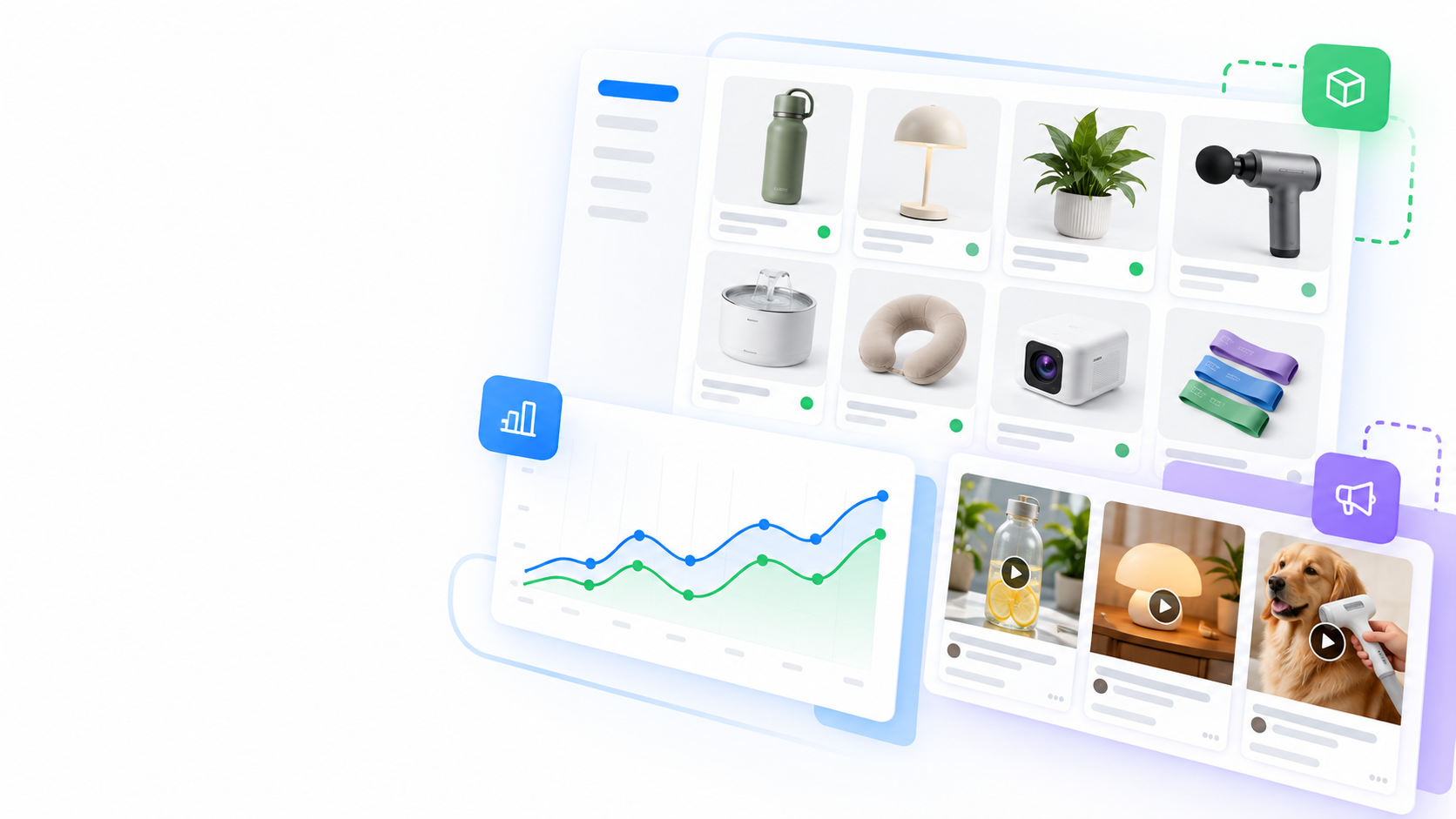
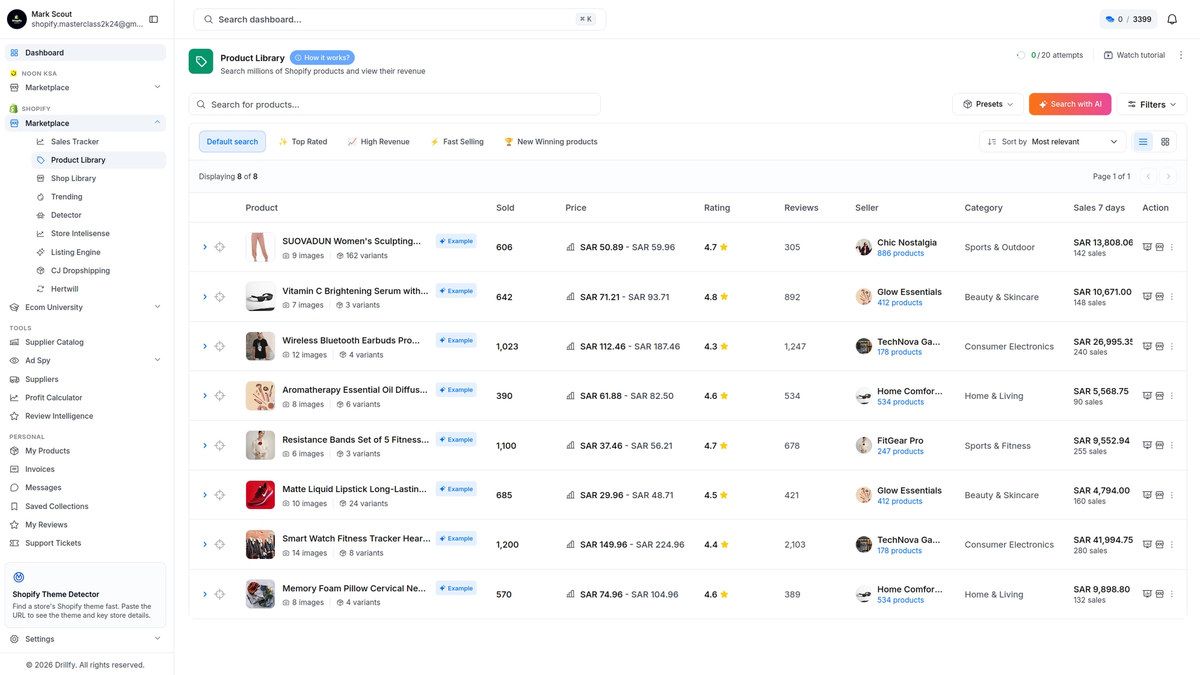
Drilify Product Library presents price, sales signals, ratings, review counts, seller context, and recent performance windows. Shop-level information adds top products, growth, average prices, and catalog size. Sales Tracker gives time-based views so you can distinguish a brief spike from sustained activity.
The benefit is a better decision sequence. Ask whether demand is moving, whether the price fits your offer, and whether customer response raises a concern. Then compare another candidate using the same questions. Estimated sales or revenue remain estimates; check freshness and the available source context before relying on a figure.
Official Product Library product-page illustration. It shows the research presentation, not results from a lookup performed for this article.
Connect TikTok and Meta creative research to the advertiser
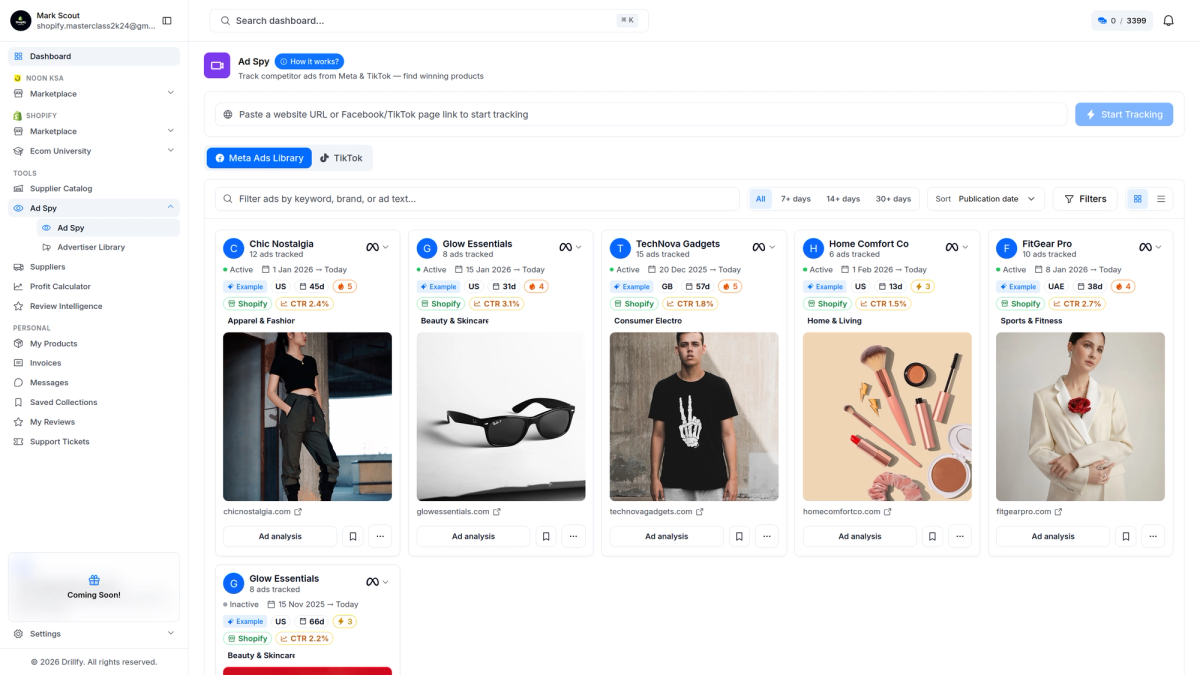
Drilify's Ad Spy has Meta and TikTok tabs. Depending on the available record, cards show creative and copy, activity duration, market, advertiser context, and destination information. The Advertiser Library adds total, unique, and active-ad counts, country coverage, and first-seen or recent-ad dates.
These are complementary views of TikTok shop or brand research inside Drilify. A creative tells you what a brand is testing; the advertiser view helps you understand the broader activity around it. Move from the advertiser to the relevant ads, then evaluate the product and its economics. A separate page name is not the measure of whether a research job is supported.
Long activity can make an ad worth investigating. Missing media or metrics just sync the brand and new data will be available. The point is to identify useful questions and creative patterns before designing your own original test.
Official Ad Spy product-page illustration. Use ad and advertiser context together; activity is a research signal, not a guaranteed return.
Compare sourcing economics before importing
Drilify's connected CJ Dropshipping workflow supplies more than a product-import action. Supplier cost, estimated retail price, estimated margin, competition, and shipping or destination details help you compare pricing room and fulfillment fit before choosing an item. Hertwill provides the same kind of sourcing and decision-support workflow through its integration.
For instance, an attractive retail estimate means little if shipping makes the delivered cost unsuitable for your market. A promising margin still needs advertising, returns, and fees added. Use competition as another signal to investigate, not as a promise that a product will sell easily. Integration connections and account access apply.
Test the economics and prepare the listing
Drilify's public Margin Calculator gives you a free starting point. The dashboard Profitability Calculator, shown in Scale's current feature list, adds decision outputs such as break-even acquisition cost, ad-cost headroom, sensitivity, and what-if scenarios. Those outputs help you decide which assumption deserves attention before spending on a launch.
The Listing Engine carries a candidate into editable product copy, specifications, and SEO title and description fields. Pricing guidance and indicative margin provide context, while plan limits govern text, bulk, and image-based capabilities. Review supplier facts, delivery claims, and proposed pricing before publishing a listing.
That is the extra step we value in Drilify: demand and creative research lead into sourcing, unit economics, and a listing you can review. It is a concrete workflow benefit, not a claim that every competitor field is identical or that every candidate will succeed.
Direct unused allowances toward the work you need
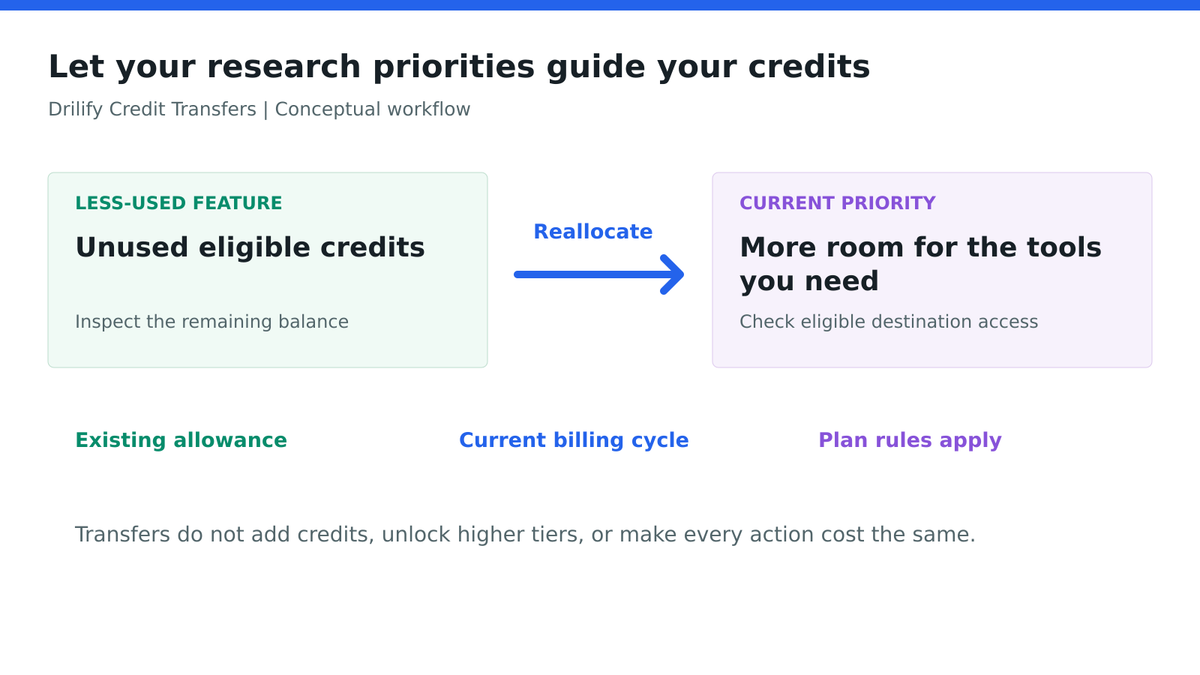
Credit Transfers is another practical Drilify benefit. Within the current billing cycle, you can move unused credits from eligible, less-used features toward eligible tools you use more, subject to the account's transfer rules and plan access.
If your work changes from catalog exploration to advertising research, inspect the available source and destination allowances before reallocating. You are shifting existing credits, not creating more credits or unlocking a higher-tier feature. Because tools consume allowances differently, transferred credits do not necessarily mean the same number of additional actions everywhere.
Conceptual Credit Transfers diagram, not a dashboard screenshot. Eligibility, remaining balance, and plan access govern transfers.
Pricing: compare the billing period and the workflow
Drilify currently lists Launch at $29/month, Scale at $49/month, and Dominate at $89/month on monthly billing. Launch includes core research, Ad Spy and Advertiser Library, text-based listing generation, and sourcing integrations. Scale's list adds Store Intelisense, Review Intelligence, bulk listings, and the dashboard Profit Calculator; Dominate adds further capabilities and report sections. Check the plan comparison against your actual requirements.
Dropship.io lists Basic at $39, Standard at $59, and Premium at $99 on monthly billing. Official Dropship.io pricing.
On monthly starting prices, Drilify Launch is $10 less than Dropship.io Basic. That does not make all tiers equivalent. Compare how many research actions you expect to perform, the integrations you need, and whether your workflow needs a higher plan. Credit totals across two platforms are not directly comparable because their charging units differ.
Before starting a paid trial elsewhere, note the conversion date and keep cancellation confirmation if you decide to leave. Dropship.io's refund guidance says it does not refund a trial that was not canceled before expiry. Its FAQ says canceled access continues through the trial or billing cycle. Those are published terms, not an independent test of billing outcomes. While Drilify has cancel anytime you want policy.
Honest pros and cons of both tools
Drilify
Pros: a useful free entry point; a lower monthly starting price; product, store, Meta/TikTok ad, sourcing, and listing workflows together; decision fields that connect research to possible pricing and fulfillment; Credit Transfers that let eligible allowances follow your priorities; Allowance credits can be transferred between features and that makes it top ecommerce research tool.
Cons: advanced reports and capabilities require higher plans; connected sourcing requires setup (even though very well explained on the platform itself and almost turned into 1 click setups); The breadth also means a new seller should learn one workflow at a time instead of opening every tool at once. Because of having more tools and feature therefore every feature needs proper evaluations.
Dropship.io
Pros: a documented research suite with basic product and shop tracking, Facebook advertiser tools, TikTok research, and curated ideas; annual billing can lower the monthly equivalent; its trial gives a short opportunity to assess workflow fit.
Cons: the three-day trial requires a prompt decision and cancellation to avoid conversion; monthly pricing starts higher than Drilify Launch; tool and tracker allowances vary by plan. Existing routines may also need adjustment when the platform or its datasets change. Also incase of credits full consumption per feature means even if you have total credits available you will not be able to use that certain feature and would need to upgrade the plan.
When to choose Dropship.io and when to choose Drilify
Choose Dropship.io when you have tested its particular research dataset and it fits a workflow you already use. Its curated ideas, creator research, or specific tracker allowances may match an established process. Budget for the chosen tier and billing commitment rather than buying because of a headline annual price.
Choose Drilify when you want to investigate a candidate and then evaluate how you could actually sell it: recent demand, relevant advertisers, supplier economics, margin assumptions, and editable listing content. Drilify is our best choice for that connected workflow, especially when the $29 monthly entry point and eligible Credit Transfers match your research needs.
Start small. Use a free margin check, explore the limited trial, and choose the lowest plan that covers your intended actions. For a wider view of the market, read our product research tools roundup. The purpose of a subscription is to support better decisions, not to turn every discovered product into a winner.
Frequently asked questions
Is Drilify a completely free Dropship.io alternative?
No. Drilify offers public free tools and a limited trial, while ongoing paid research starts at $29/month. The free entry point helps you evaluate tasks and workflow; it does not grant unlimited access to the paid platform.
Is Dropship.io free after its trial?
Its official help center describes a three-day trial followed by a charge if you do not cancel. Review the trial's terms and conversion date before entering payment details (because users have been complaining about their charges happening even after canceling the trial).
Does Drilify support TikTok research?
Yes. The TikTok tab in Ad Spy and TikTok filtering in Advertiser Library support creative and brand research. Use available activity, market, advertiser, and ad context together; do not assume every platform exposes identical metrics.
Can I move unused Drilify credits to another tool?
Credit Transfers lets you shift unused allowances between eligible features for the current billing cycle, subject to the applicable rules. It does not add credits or bypass plan restrictions.
Which Drilify plan should I start with?
Launch is the $29/month starting point for core research, text-based listings, and sourcing integrations. Check Scale or Dominate if your intended workflow needs their advanced tools or sections. Use the current pricing matrix to confirm access and allowances.
Does an estimated margin prove a product is profitable?
No. Estimated retail and margin are planning signals. Add shipping, fees, acquisition costs, and returns using realistic assumptions, then test carefully. Actual costs and customer demand determine the result.
Start with free tools to answer a concrete question. When you need repeat research and a connected path from candidate to listing, compare your requirements with Drilify's plans.
Published by Drilify. This comparison uses documented product capabilities and current public terms, not a paid-account accuracy or billing test.