9 Best Dropshipping Product Research Tools (Free & Paid)
Compare nine free and paid product research tools, with Drilify leading for its connected path from product discovery to sourcing, profit checks, and launch preparation.
Compare nine free and paid product research tools, with Drilify leading for its connected path from product discovery to sourcing, profit checks, and launch preparation.
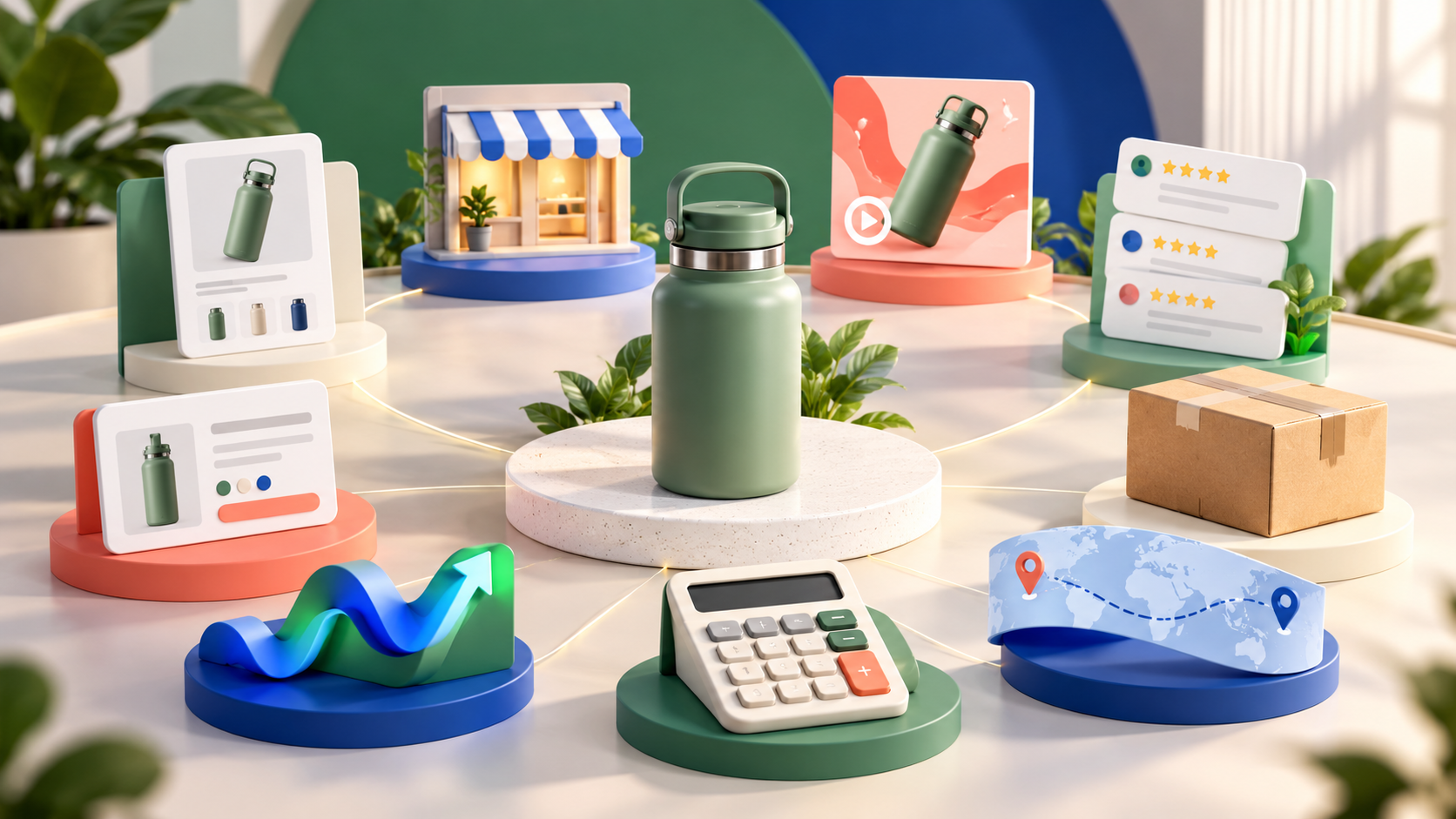
Drilify is our top pick for dropshipping product research because it carries a product idea beyond discovery. You can examine products and stores, study Meta and TikTok ads, compare sourcing options, check profitability, and prepare a listing in one workflow. The other tools here can be excellent for a narrower job; the right choice depends on the decision you need to make next.
This comparison covers nine free and paid tools, what each does well, where it stops, and how to build a research stack that leads to a testable product decision. Use the ratings as a quick guide, then read the tool sections for the details behind each choice.
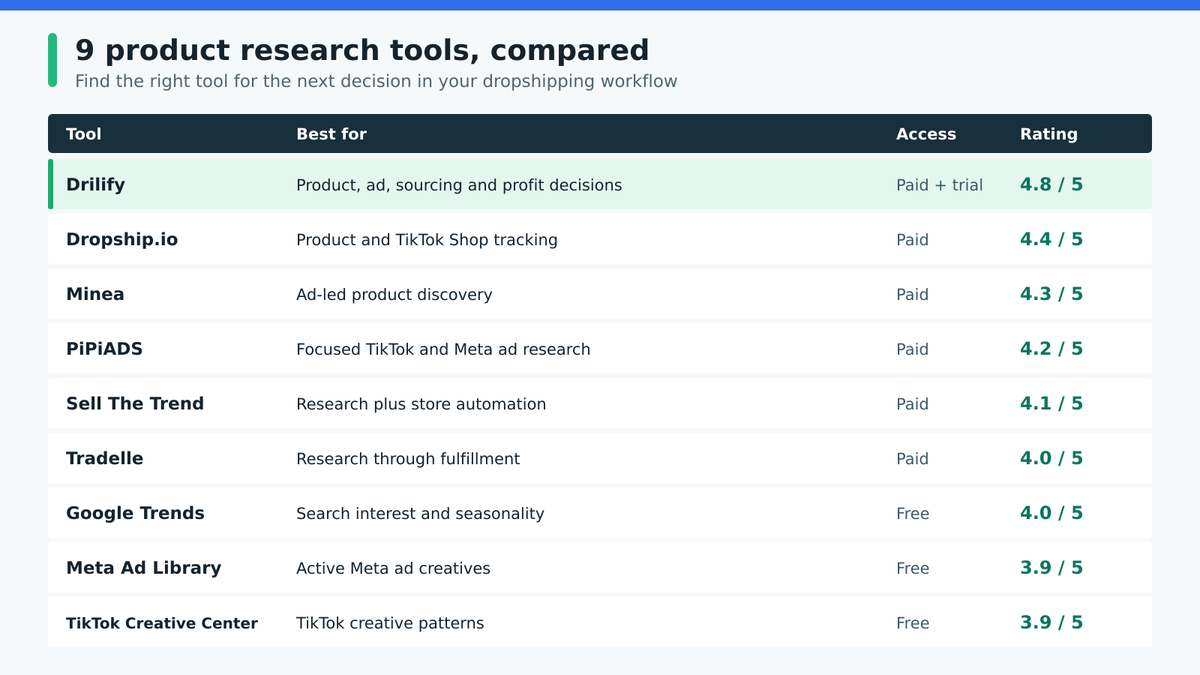
Best dropshipping product research tools at a glance
Drilify leads the roundup for its connected path from product discovery to sourcing, profit checks, and listing preparation.
Comparison in text
Drilify: Product, ad, sourcing, and profit decisions in one workflow. Paid with a trial. Our rating: 4.8/5.
Dropship.io: Product and TikTok Shop tracking. Paid. Our rating: 4.4/5.
Drilify leads when you want one place to move from a product signal to ads, sourcing, margins, and a listing. The free tools remain useful for focused checks, especially seasonality and creative research.
What matters in a product research tool
A useful tool should help answer at least one concrete question: Is interest growing? Are stores and ads showing traction? What do customers like or dislike? Can you source and ship the product? Will the numbers work after fees and acquisition costs? Choose the tool that closes the gaps in your current workflow.
No single signal settles the decision. Compare independent product, ad, customer, and cost evidence, then use a small test to see whether your offer works in your market. Drilify is strongest here because those research steps connect rather than ending at a list of ideas.
1. Drilify: Best overall research-to-launch workflow
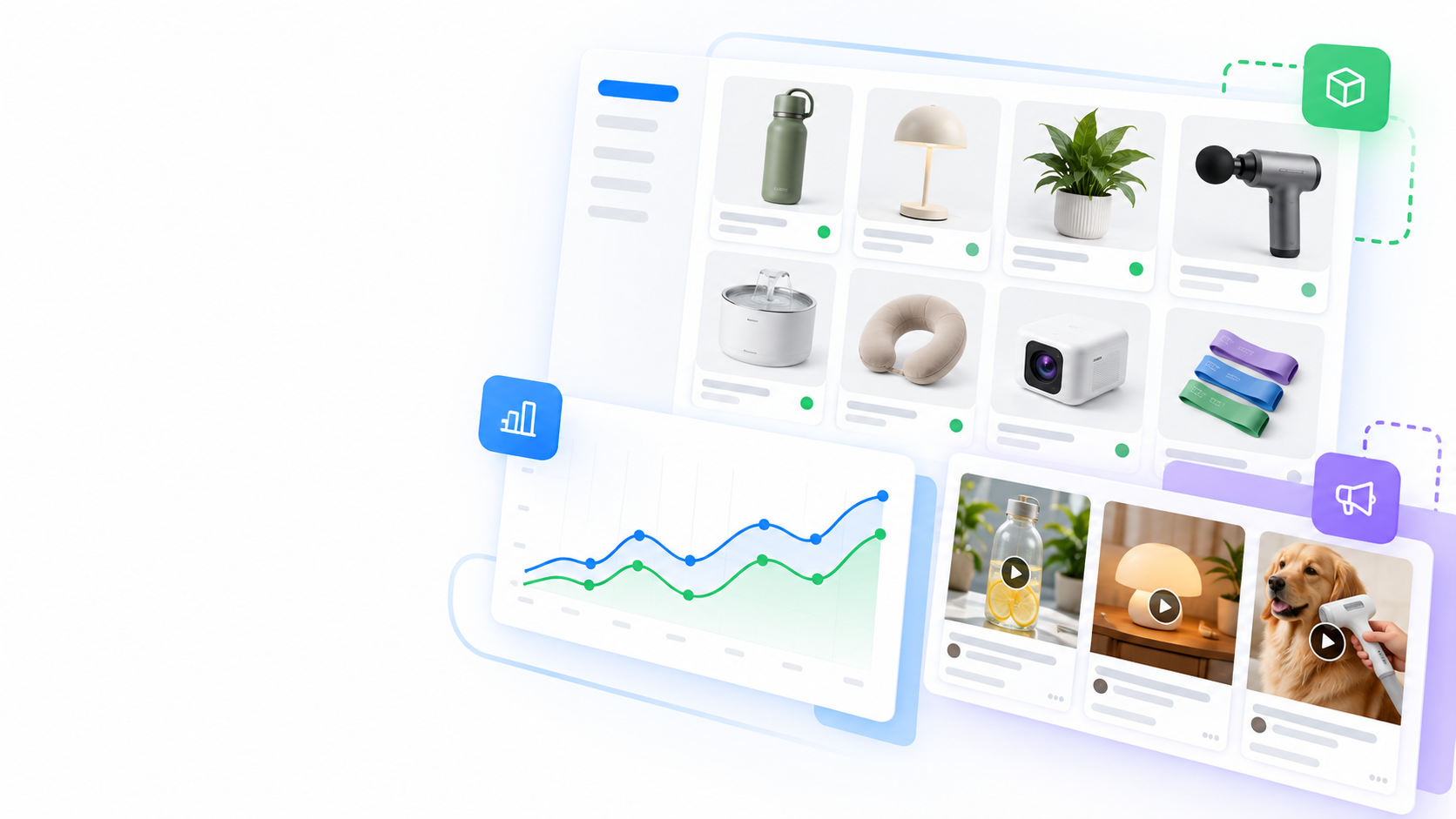
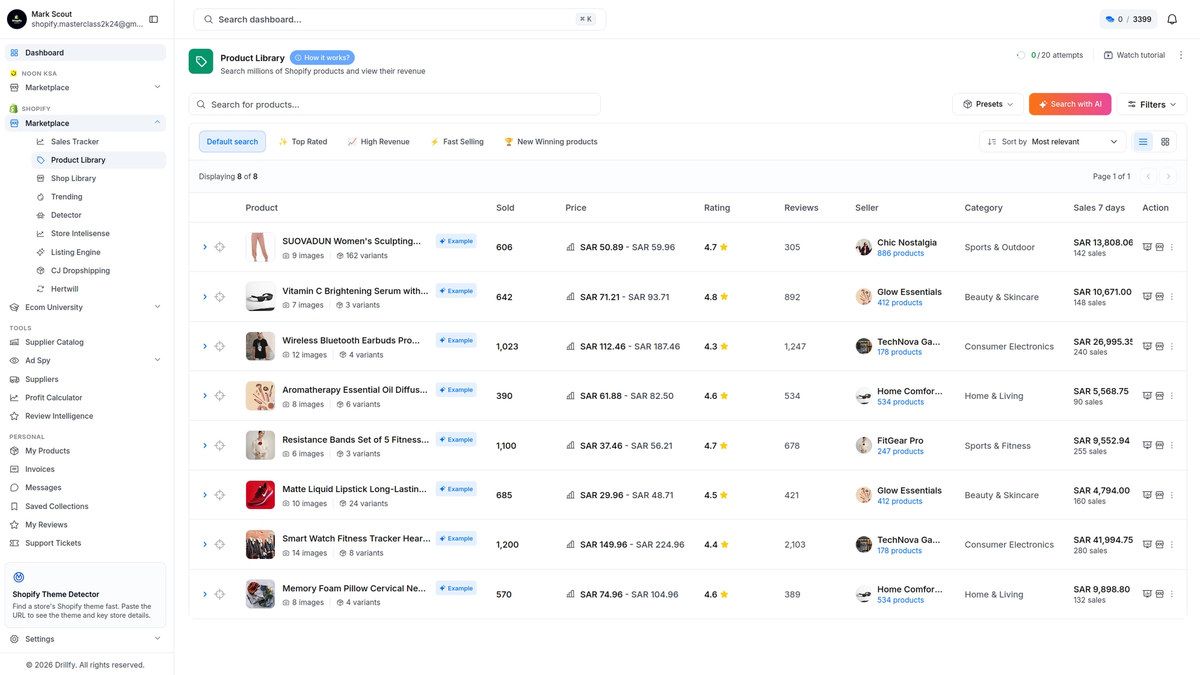
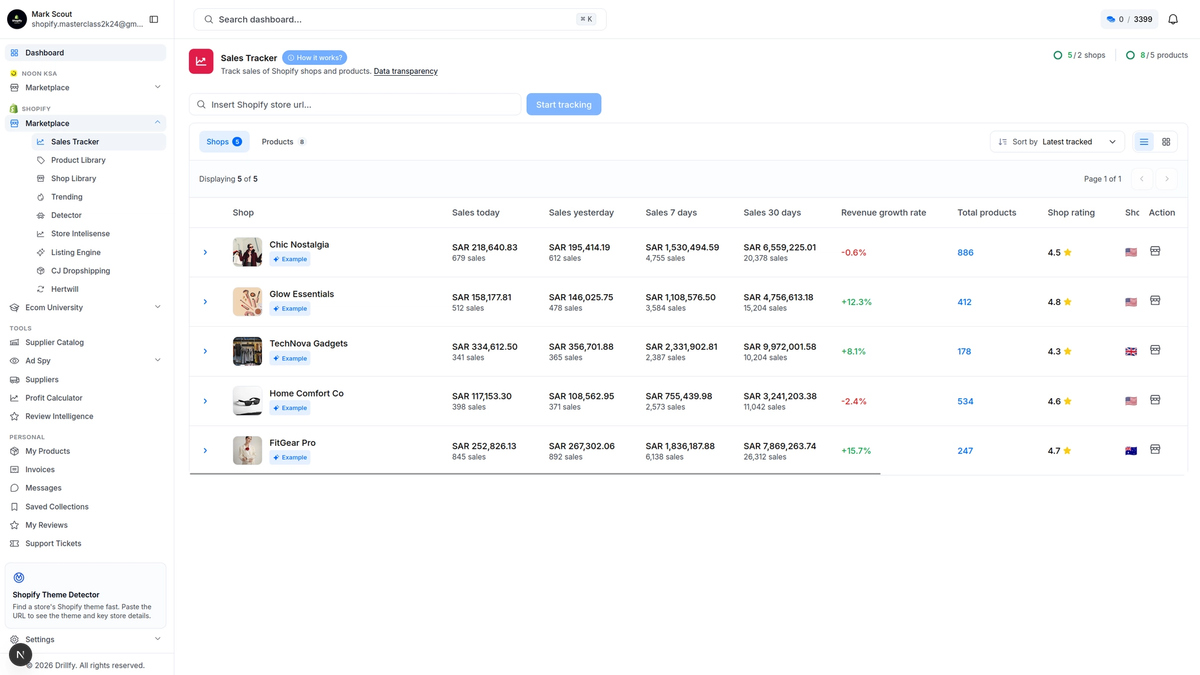
Drilify brings product, shop, ad, sourcing, profitability, and listing research into one dashboard. Start in Product Library, then use store context and Sales Tracking to investigate momentum and price movement instead of judging a product from one snapshot.
Build a shortlist in Drilify Product Library, then open the records behind the most promising products.
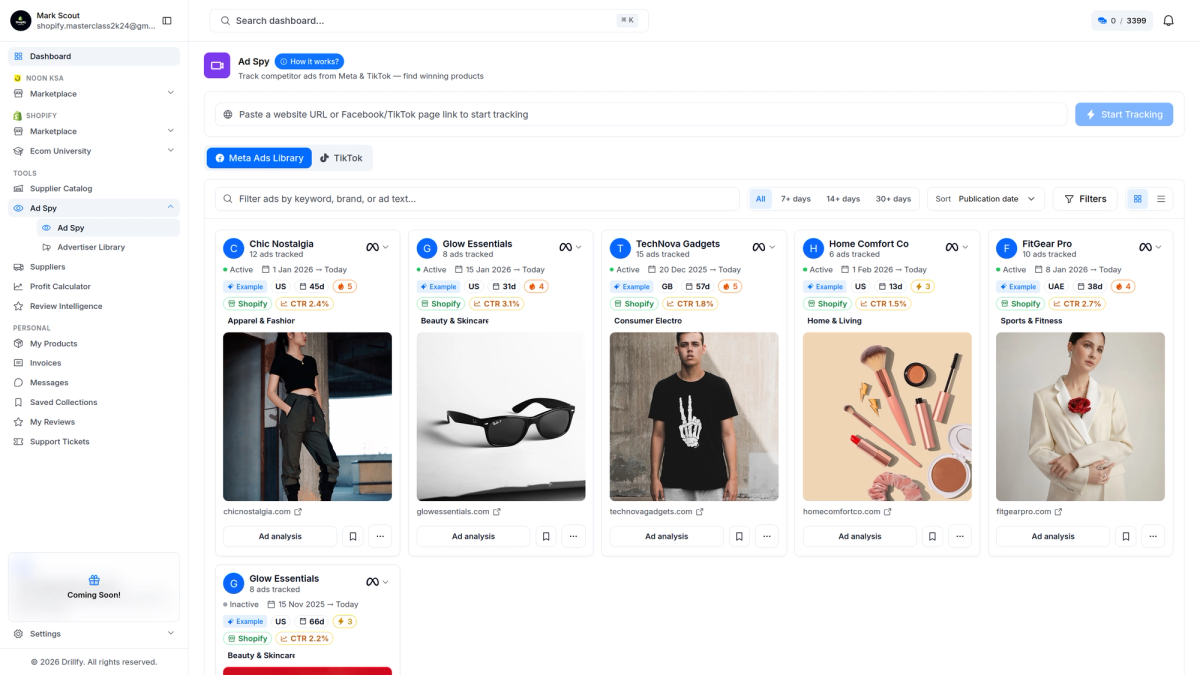
From product signals, Drilify takes you into creative and advertiser research. Ad Spy and Advertiser Library help you compare Meta and TikTok creatives. CJ Dropshipping and Hertwill sourcing workflows add product and supplier context; the Profitability Calculator lets you test fees, advertising, returns, margin, break-even CPA, and ROAS. Listing Engine then turns the researched product into an editable listing draft. That connected sequence is Drilify's clearest advantage.
Compare creative angles and advertiser patterns in Drilify Ad Spy.
Key features: Product and shop libraries, sales tracking, Meta and TikTok ad research, store intelligence, sourcing workflows, profitability modeling, and listing preparation.
Pricing: Paid plans start at $29/month. Drilify advertises a limited three-day trial without a credit card. Check the current plan comparison for feature access and allowances.
Pros: Moves from product and store discovery into ad angles, sourcing, unit economics, and listing preparation without rebuilding the research in separate tools.
Cons: The breadth takes time to learn, and some advanced reports and actions depend on the plan you choose.
Best for: Sellers who want one research workspace that continues beyond discovery into validation and launch preparation.
2. Dropship.io: Best for product and TikTok Shop tracking
Dropship.io offers product and shop libraries, TikTok Shop product and seller research, product and shop tracking, Facebook ad and advertiser research, competitor research, curated product drops, creator research, and product imports. It is a broad research suite, especially for sellers who want TikTok Shop data alongside store and advertising workflows.
Dropship.io's product and shop tracking can help you spot sales, price, rating, and trend changes in TikTok Shop. That is valuable for building a shortlist. To test whether the offer can work for your store, pair those signals with sourcing and profit checks in Drilify's Product Libraries and its calculator workflow.
Key features: Product and Shop Libraries; TikTok product, shop, and creator research; trackers; Facebook Ad Library and Advertiser Library; competitor research; curated product drops; imports.
Pricing: $39/month for Basic, $59 for Standard, and $99 for Premium. Annual billing lowers the monthly equivalent. A trial is advertised.
Pros: Wide research coverage; strong TikTok Shop emphasis; useful tracking and competitor workflows.
Cons: Credit and tracker limits vary by tier; estimates should be independently validated; monthly pricing rises quickly above Basic.
Best for: Sellers whose shortlist depends heavily on TikTok Shop products, shops, and creators.
3. Minea: Best for ad-led product discovery
Minea approaches product research through advertising, products, shops, brands, suppliers, and AI-assisted search. Its plan comparison includes Meta and TikTok ad listings, product and shop listings, a brand tracker, saved collections, daily niche lists, ad analysis, transcripts, and Magic Search. This makes it useful when your research starts with creative activity and then moves toward the product or advertiser behind it.
Ad activity is a useful starting signal, but the offer still needs customer, supplier, and margin checks. Drilify Ad Spy gives you a Meta and TikTok research entry point, then connects the strongest angle to product, store, sourcing, and profit research.
Key features: Meta and TikTok ad listings; product and shop discovery; brand tracking; supplier finding; saved collections; AI ad analysis and search.
Pricing: Starter is $49/month, Premium $99/month, and Business $199/month. Quarterly billing can reduce the monthly equivalent.
Pros: Strong ad-first workflow; broad filters and competitor context; useful brand and shop follow-up.
Cons: Higher tiers are required for larger limits and more automation; ad activity alone cannot establish sales or profit.
Best for: Sellers who discover ideas through ads and want to trace them back to products, shops, and brands.
4. PiPiADS: Best for focused TikTok and Facebook ad intelligence
PiPiADS is a specialist advertising-research platform covering TikTok and Facebook ads, advertisers, products, rankings, and TikTok Shop. Its current membership uses credits: list results and detail views consume different amounts, and the number of ad trackers varies by plan.
PiPiADS is a strong choice when creative and advertiser intelligence is the main job. Drilify Ad Spy is the more connected choice when that ad research must lead into product selection, sourcing, profitability, and a listing you can test.
Key features: TikTok and Facebook ad search; advertiser research; product and app data; rankings; TikTok Shop research; ad trackers; exports.
Pricing: Basic starts at $49/month and Advanced at $99/month. Enterprise and team plans cost more.
Pros: Deep ad-research focus; Meta and TikTok coverage; useful filters, rankings, and tracking.
Cons: Credit consumption needs monitoring; specialist depth may be more than a beginner needs; supplier and profit checks remain separate.
Best for: Media buyers and product researchers who want dedicated ad intelligence.
5. Sell The Trend: Best for research plus store automation
Sell The Trend combines NEXUS AI product discovery with handpicked products, Facebook and TikTok ad finders, store intelligence, niche research, supplier tools, product imports, fulfillment, and store-building features. It aims to carry an idea from discovery into store operations.
Lite is suited to a smaller research routine, while higher plans expand searches, monitoring, imports, connected stores, and TikTok features. If your main goal is to compare product and store signals alongside costs, Drilify Sales Tracking and its profitability workflow make a stronger research-first path.
Key features: AI product discovery; ad finders; store and niche intelligence; trend explorers; suppliers; imports; fulfillment; automation.
Pricing: Displayed monthly offers start at $29.97 for Lite, $49.97 for Essential, and $99.97 for Pro. Annual equivalents are lower, and a free trial is advertised.
Pros: Broad research and operational toolkit; supports multiple store platforms; useful for sellers who want automation after discovery.
Cons: The large feature set can feel busy; important limits and TikTok access vary by plan; promotional pricing may change.
Best for: Sellers who want product discovery, imports, and store automation in one subscription.
6. Tradelle: Best for research connected to fulfillment
Tradelle combines product picks, current trends, seasonality, saturation, profit estimates, competitor research, store exploration, product imports, sourcing, and order fulfillment. Advanced plans add deeper store and competitor data, including revenue, traffic, ad strategy, and bestseller context.
Tradelle stands out for connecting product research with fulfillment. Drilify gives you another route from product discovery to supplier options and profit checks: compare estimated retail price, margin, shipping, and supplier context before deciding what to import. Start with Drilify Product Libraries and follow the candidate through the connected research steps.
Key features: Product Picks and trends; seasonality and saturation; profit estimates; Store Explorer; competitor research; imports; sourcing; automated fulfillment.
Pricing: Lite is $29.99/month, Starter $49.99, and Pro $79.99. Annual billing is discounted. Tradelle advertises a seven-day trial for $1 and a 14-day money-back period.
Pros: Research and fulfillment are closely connected; useful seasonality and sourcing context; clear progression between plans.
Cons: Advanced competitor research is limited on Lite; the best plan depends on import and fulfillment volume; estimated profit requires your own cost validation.
Best for: Sellers who want a research tool closely tied to sourcing and order operations.
7. Google Trends: Best free tool for seasonality
Google Trends is a free way to compare search interest over time, across regions, and between terms or topics. It is especially useful for identifying recurring seasonal peaks, checking whether interest is rising or declining, and comparing the language buyers use.
Trends data is normalized rather than absolute sales or search volume. A score of 100 marks the point of highest relative interest in the selected comparison; it does not mean 100 searches or 100 sales. Use it as a timing signal alongside product-level evidence from Drilify Product Libraries.
Key features: Interest over time; regional comparisons; related and rising searches; term and topic comparisons.
Pricing: Free.
Pros: Native Google search-interest source; excellent for seasonality and geographic direction; easy to compare several ideas.
Cons: No product sales, supplier, shipping, or profit data; low-volume terms can be noisy; relative interest can be misread.
Best for: Validating timing and regional demand direction before deeper product research.
8. Meta Ad Library: Best free tool for active Meta creatives
Meta Ad Library lets you search ads by advertiser or keyword and filter by country and ad category. It is useful when you already know a competitor, brand, or product angle and want to inspect the creatives and landing pages currently visible in Meta's library.
An active ad proves that an advertiser is running it, not that the campaign is profitable. For filters, duration context, advertiser fields, saved collections, and a broader research workflow, compare Drilify Ad Spy.
Key features: Keyword and advertiser search; country filters; ad creatives and copy; advertiser context; landing-page links where available.
Pricing: Free public browsing.
Pros: Direct public source for Meta ads; quick competitor checks; no subscription needed.
Cons: Ordinary commercial ads do not reveal exact revenue or return on ad spend; manual comparison takes time; information varies by category and region.
Best for: Free checks of a known competitor's current Meta advertising.
9. TikTok Creative Center: Best free tool for creative validation
TikTok Creative Center provides Top Ads, trend discovery, creative inspiration, and performance views for selected ads. Region, industry, objective, and time filters help narrow the examples to the market and campaign type you want to study.
Top Ads is a selected collection, not every competitor campaign, and strong creative performance does not prove that a product is profitable. Use it to study hooks, demonstrations, pacing, and formats. For TikTok ad and advertiser research within a broader workflow, inspect Drilify Ad Spy and Advertiser Library.
Key features: Top Ads; trend discovery; region, industry, objective, and time filters; creative-performance views.
Pricing: Free. Some access and insights expand after login.
Pros: Native TikTok creative source; useful for hooks and format research; no paid subscription required.
Cons: Curated rather than exhaustive; does not verify supplier reliability, delivered costs, or net profit; creative metrics answer a narrower question than product research.
Best for: Validating TikTok creative angles before producing and testing your own ads.
Free vs. paid product research tools: Which should you choose?
Free tools are useful for a focused first pass. Google Trends shows interest and seasonality; Meta Ad Library and TikTok Creative Center reveal current creative approaches. You can build a shortlist this way, but you will still have to connect product, supplier, shipping, and profit evidence yourself.
If you research products regularly, Drilify is the stronger all-around choice: product and store views lead into ads, sourcing, profitability, and listing preparation. Choose a specialist such as PiPiADS or Minea when ad depth is your priority, or Sell The Trend and Tradelle when automation or fulfillment defines the workflow.
Use Drilify Sales Tracking to see how product activity changes over time.
A practical five-step research workflow
Define the market and constraints. Set the country, customer problem, target selling price, delivery promise, and maximum test budget before browsing.
Build a shortlist. Build candidates in Drilify Product Library or another product source. Keep only those that fit your market, price, and delivery constraints.
Collect independent evidence. Use Drilify's product, store, ad, and tracking views alongside search interest and customer feedback.
Verify sourcing and economics. Confirm supplier terms, shipping, fees, returns, break-even CPA, and margin under realistic scenarios.
Run a bounded test. Set spend and decision thresholds before launch. Let actual store results determine whether to stop, revise, or scale.
Frequently asked questions
What is the best dropshipping product research tool?
Drilify is the strongest all-around choice in this comparison for sellers who want product, shop, ad, sourcing, profitability, and listing workflows connected. The best specialist option depends on the job: PiPiADS for dedicated ad intelligence, Dropship.io for TikTok Shop tracking, and Google Trends for free seasonality checks.
Can I do dropshipping product research for free?
Yes. Google Trends, Meta Ad Library, and TikTok Creative Center can validate search direction and advertising patterns. Free research takes more manual work and does not replace supplier, cost, shipping, and profit checks.
Are product-research sales estimates accurate?
Treat estimates as directional. Check the marketplace, date, coverage, freshness, and estimate labels. A competitor revenue estimate does not reveal its advertising costs, refunds, fees, or net profit.
Which product research tool is best for TikTok?
TikTok Creative Center is the best free creative source in this list. PiPiADS provides specialist TikTok ad research, Dropship.io emphasizes TikTok Shop tracking, and Drilify combines TikTok Ad Spy and advertiser research with a wider product-to-launch workflow.
How many product research tools do I need?
Usually one main paid workflow plus one or two free validation sources is enough. Multiple subscriptions that repeat the same signal add cost without adding independent evidence.
Is Drilify free?
Drilify advertises a limited three-day trial without a credit card plus there are some free tools offered by drilify publicly available for access too. Paid plans start at $29/month. Check current plan access and allowances before choosing a tier.
Choose the tool that supports the whole decision
A promising product is more than a trending item. It needs customer demand, a clear offer, workable sourcing, reliable delivery, and economics that survive acquisition costs and returns. Drilify helps connect those checks, which is why it leads this comparison.
Ready to move from a product idea to a testable offer with connected product, shop, ad, sourcing, profitability, and listing research? Try Drilify free.